

Thinking about a prefabricated home? Here are eight must know insights about home buying, before you take the plunge — from costs to customizing options and financing options — that could change your mind about buying a home.
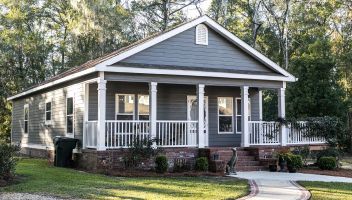
1. Prefabricated House Knowledge
Prefabricated homes, manufactured in sections or modules in a factory and then carried onto the building site where they are assembled, are quite different from traditional ‘stick built’ houses, those being completely built on site. Three kinds of prefabricated homes exist: namely, modular, manufactured, and panelized homes. Each differs in method of construction, design flexibility, and building code compliance.
2. Affordability
One of the greatest appeals with regard to prefab homes is to do with cost efficiency. Generally, prefab homes tend to be much more affordable as compared to traditional homes because labor costs are reduced, and materials are utilized efficiently. Because the construction process is streamlined, waste-either in materials or time-is reduced; thus, it is cost-effective sans the apparent compromise of quality.
3. Speedy Construction Process
Prefabricated homes can be assembled more quickly than conventional ones, since so many of the parts are prefabricated. For on-site assembly, it should be relatively easy and fast. Besides saving labor costs, this speed can get residents into their houses much quicker than with traditional methods. Be sure to consider that site preparation, entailing obtaining permits and utility connections, can also take time.
4. Energy Efficiency
Many prefabricated homes are designed with energy efficiency in mind. Apart from the comfort and money-saving technique, improved insulation, high-efficiency HVAC systems-even solar panels-may significantly reduce utility bills over time. More and more, this eco-friendly aspect appeals to environmentally cautious buyers who look at reducing their carbon footprint while enjoying lower energy costs.
5. Options for Customization
While prefab homes can be tailored for various designs, there might be limitations in customization when compared to a traditionally built home. Several manufacturers offer a number of floor plans and different finishes available; yet major changes might not be possible because of the modularity of the building process. It will be important to speak to the specifics of your needs with the manufacturers early in the buying process.
6. Land Acquisition Problems
Another important task involving a prefab home is buying land. While purchasing an already existing home would include land, you will have to buy your land separately for the prefab house. This can also be very expensive and requires careful research into zoning laws and access to utilities. Do your homework on the cost of land and any restrictions that may impact your purchase.
7. Financing Considerations
Financing a prefab home may vary from traditional home loans. Since the home is fabricated in controlled conditions, most lenders consider a prefab home as less of a risk, which could mean lower mortgage rates. Financing can be quite involved, usually consisting of two separate portions: one for the land and one for the actual home. Trying to understand all the issues involved is complex; hence, the services of financial advisors with experience in prefab financing should be used.
8. Less Obvious Costs to Watch Out For
While the base price of a prefabricated house may attract a buyer, it is pertinent he or she is aware of the following costs that occur along the way:
1) Site Preparation Costs: Land clearing, Foundation, and utility hookups can set you back an amount.
2) Transport Costs: If your building site is located at some considerable distance from the manufacturing factory or in areas where accessibility is not easy, then the transport cost of the modules may become high.
3) Permitting Fees: Getting necessary permits can also include some expenses that you will need to add to your budget.
Conclusion
There are a lot of advantageous points related to prefab home investments, which include, but are not limited to, cost-effectiveness, speed in construction, and efficiency in energy. But in actuality, these are quite complex processes, from land acquisition to financing, making it never straightforward. Taking the above eight insights into consideration will help the future homeowner make their way through this exciting-yet rather intricate-process of purchasing a prefab with confidence and clarity.